LED strips: the details that make a difference to the final result
LED strips: the details that make a difference to the final result
LED strips can create ambient lighting, highlight decorative features or illuminate work areas. However, choosing a strip based only on its colour or length can result in insufficient light, uneven brightness or an incompatible power supply.
Before buying, it is important to consider the LED strip as part of a complete system that includes the power supply, controllers, connections and, when necessary, a suitable profile.
Start with the effect you want
The first step is to decide how the lighting will be used.
A decorative strip can be installed in coving, furniture, shelving or behind a television. To illuminate a worktop, shop window or work area, greater attention must be paid to light output and colour rendering.
A strip that creates an attractive decorative effect may therefore not provide enough light for a functional application.
SMD or COB?
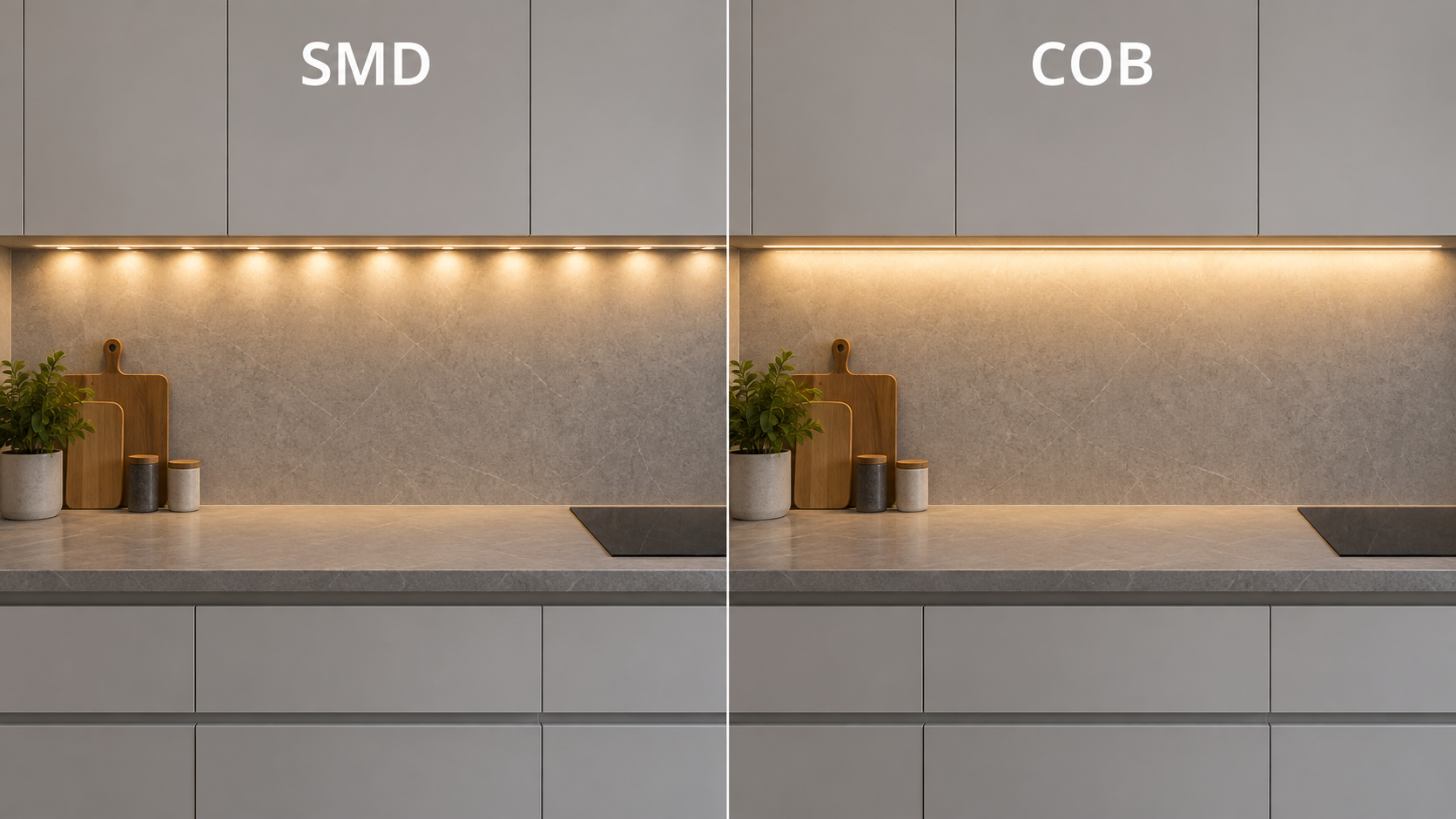
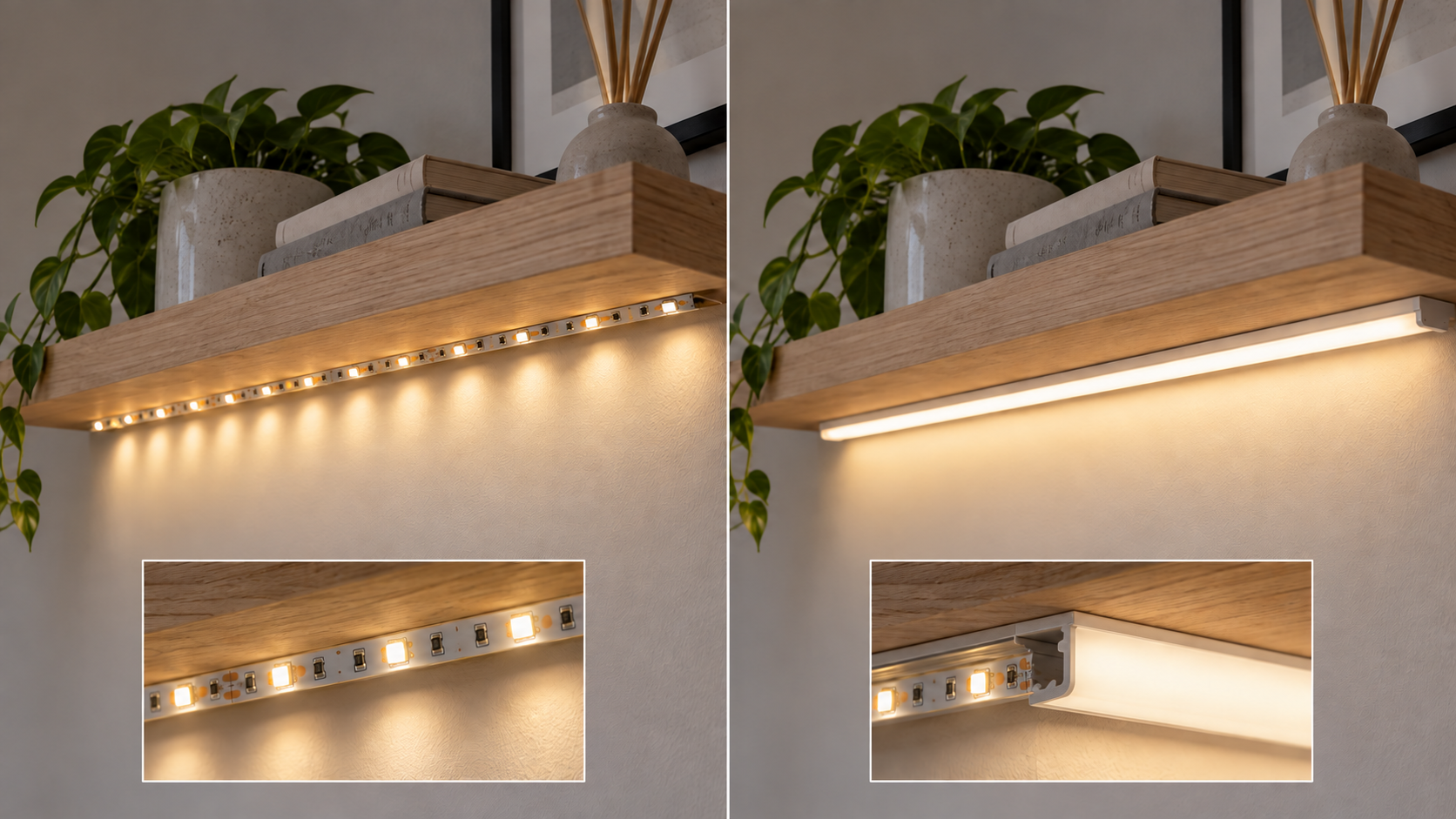
With SMD strips, the individual points of light may be more visible, especially when the strip is exposed. Many models, power ratings and colour temperatures are available.
COB strips produce a more continuous line of light, reducing the appearance of separate light points. They are particularly suitable for visible installations or areas close to reflective surfaces.
Neither technology is automatically better for every application. The right choice depends on the desired effect, power, installation area and whether a profile with a diffuser will be used.
12V or 24V LED strips?
The voltage of the strip must match the output voltage of the power supply.
12V strips are commonly used in smaller installations. 24V versions may be more suitable for longer runs, as they can help reduce variations in brightness along the strip.
Both normally require a compatible power supply unless one is already included in a kit. USB-powered and battery-powered models are also available, as well as strips specifically designed for connection to a 230V supply.
Always follow the maximum length and instructions specified by the manufacturer. A 12V or 24V strip must never be connected directly to 230V. Strips specifically designed for 230V must be installed using the accessories indicated by the manufacturer.
Do not confuse watts with light output
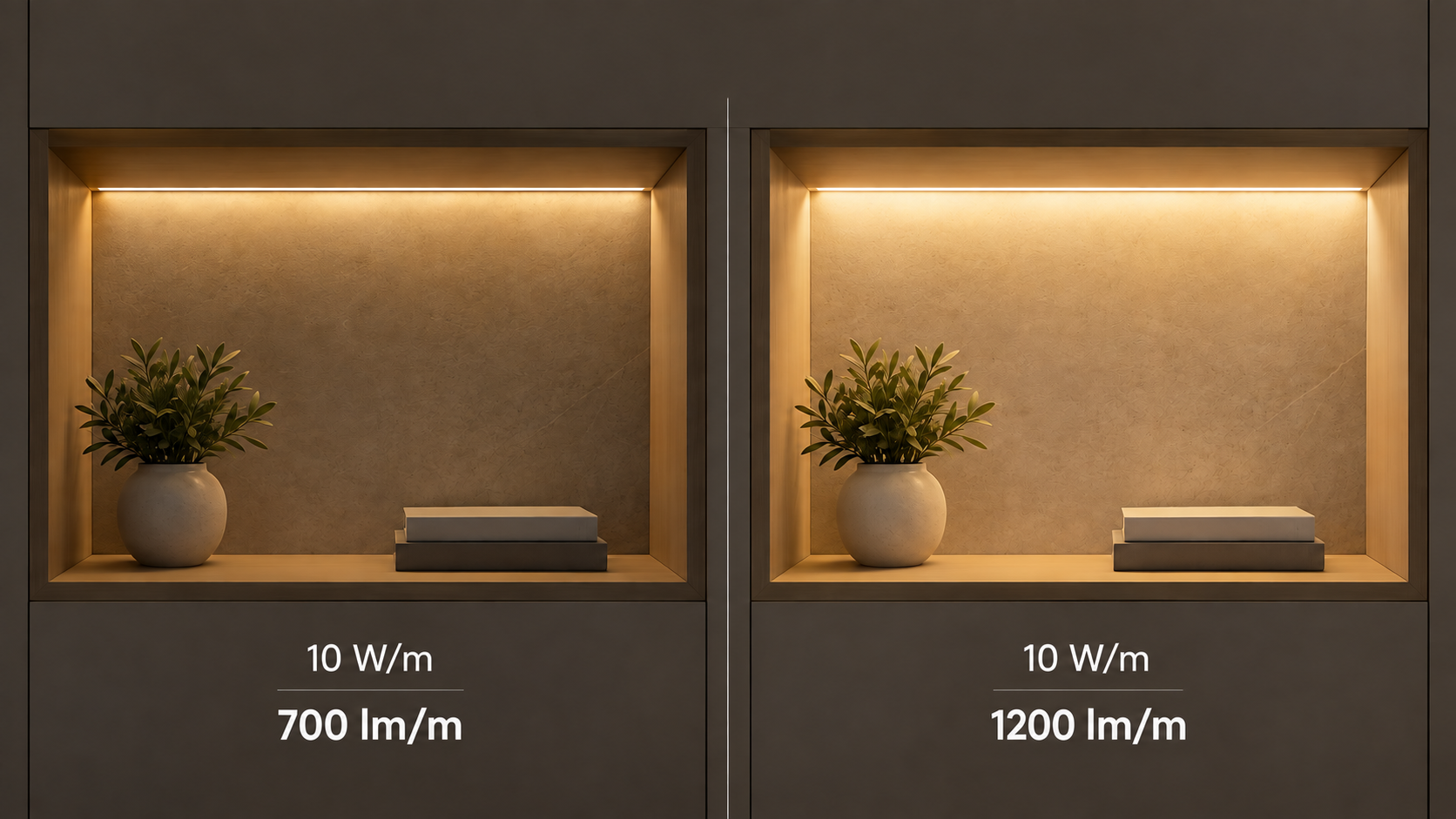
Power, normally shown in watts per metre (W/m), indicates the strip’s electricity consumption. Lumens per metre (lm/m) indicate the amount of light produced.
Two strips with the same power rating can produce different amounts of light. For functional lighting, compare the lumens per metre rather than looking only at the wattage or number of LEDs.
The colour rendering index (CRI) should also be considered. A high CRI is particularly important in kitchens, shops, display windows and spaces where colours need to appear more accurately.
The power supply must be correctly sized
To calculate the total consumption, multiply the power per metre by the length of strip being used.
For example, a 10W/m strip with a length of five metres will have a total consumption of 50W.
The power supply must:
provide exactly the required voltage, such as 12V or 24V;
support the total power of the installation;
allow for the margin recommended by the manufacturer;
be compatible with the controller or dimming system, when applicable.
An undersized power supply may overheat, switch off or reduce the reliability of the installation. For longer runs, it may also be necessary to divide the power supply or add further power injection points, following the manufacturer’s instructions.
Choose the right level of protection
For dry indoor areas, strips with an IP20 rating are commonly used. In places exposed to moisture, dust or water, a higher rating such as IP65 or IP67 may be required.
Protection does not depend only on the strip. Connections, end caps, controllers and power supplies must also be suitable for the environment.
For bathrooms, outdoor areas or installations close to water, seek professional advice and follow the applicable electrical installation regulations.
White, RGB or dimmable light?
A white LED strip is suitable when the main purpose is illumination. The colour temperature should complement the space:
2700K or 3000K for warmer, more comfortable light;
4000K for neutral and versatile light;
6000K or 6500K for technical areas and spaces where cooler light is preferred.
RGB strips can create coloured lighting effects, while RGBW strips include an additional white-light channel. Some models also allow the brightness or colour temperature to be adjusted.
In these cases, check that the strip, power supply and controller are compatible with one another.
The profile also affects the final result
An aluminium profile can improve the finish, protect the strip and help with heat dissipation. A diffuser makes the light more uniform and can reduce the visibility of individual light points.
Before installation, check the strip width, profile dimensions, cutting points and available space.
Send us the dimensions of the space and tell us what lighting effect you would like to achieve. If you already have an LED strip or power supply, you can also send us a photograph of its label.
The Wattlamp team can help you identify the required components and find a suitable solution.