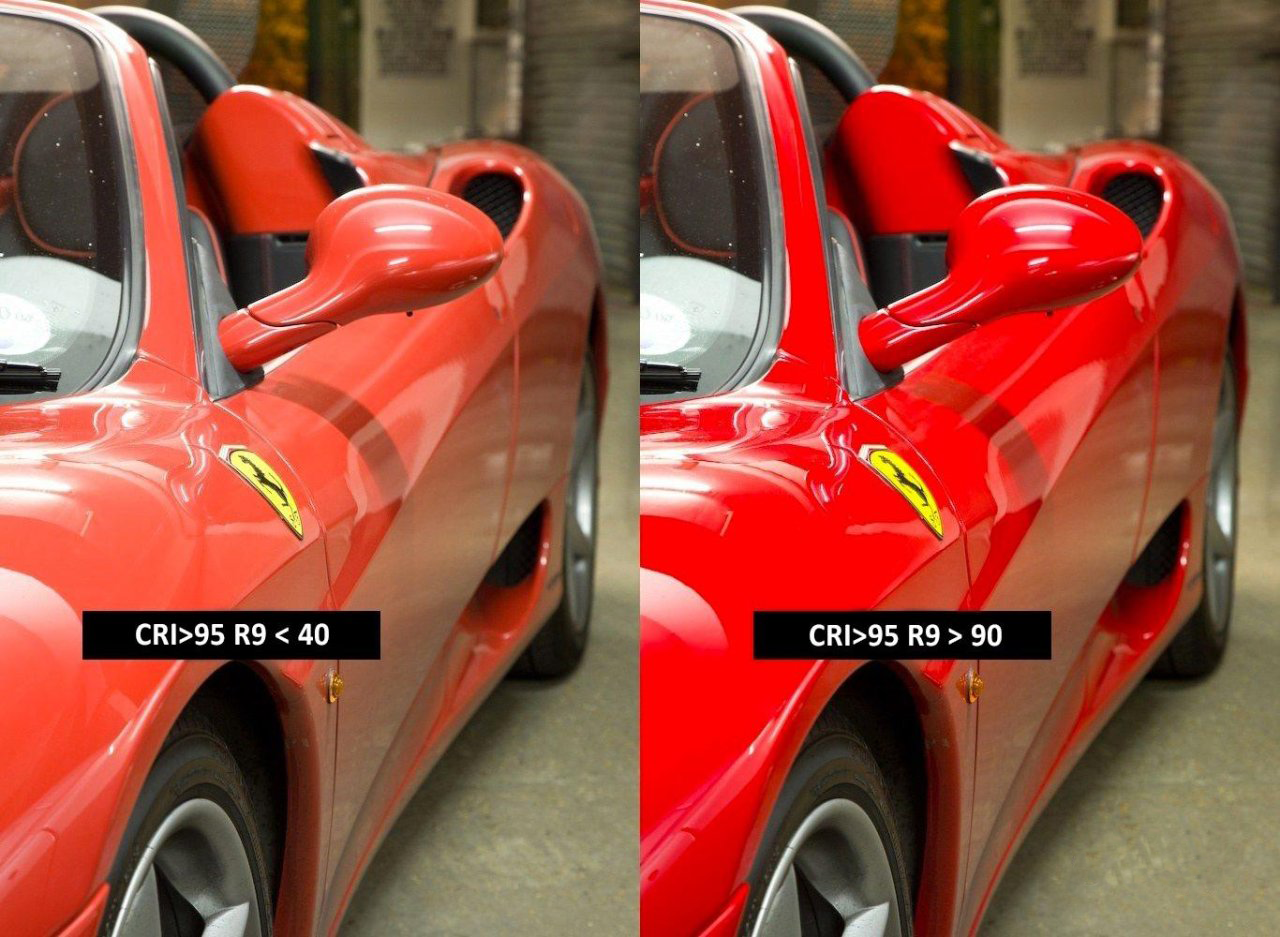
Do two bulbs with the same CRI render colours in the same way?
Do two bulbs with the same CRI render colours in the same way?
Imagine two LED bulbs with the same colour temperature — 3000K — and the same CRI of 90. At first glance, both produce a similar warm white light. However, when illuminating clothing, food or a wood finish, the results may differ.
This happens because CRI is a useful reference, but a single number does not describe everything we see under a light source.
What does CRI measure?
The Colour Rendering Index, or CRI, compares the appearance of certain colours under a lamp with their appearance under a reference light source. The higher the value, the smaller the differences tend to be for the colours assessed by the method.
In our article What is CRI in lighting?, we explain why this value matters when choosing a bulb. There is, however, an important detail: the general CRI, also known as Ra, is calculated using eight colour samples. On its own, it does not show how the light renders every shade or material. This is why two sources with the same CRI can produce different results.
Why can colours look different?
White light does not have exactly the same composition in every lamp. Each source emits light across different parts of the visible spectrum and in different proportions. This composition is known as its spectral distribution.
Two bulbs can therefore appear equally white and have similar CRI values, yet render a red fabric, a food item or a skin tone differently. Two materials may also appear to have the same colour under one light source but no longer match when the lighting changes — a phenomenon known as metamerism.
In practice, these differences matter most when colour is part of the experience or task: choosing clothes, displaying food, assessing make-up, comparing finishes or exhibiting artwork.
What other values can help?
One is R9, which assesses the rendering of a saturated red. This value is not included in the general CRI average. When reds and skin tones are important, it can therefore be worth checking R9 in the technical datasheet, if available.
For projects with more demanding colour requirements, the TM-30 method may also be used. It assesses more colour samples and provides, among other information, two indicators:
Rf indicates the average colour fidelity compared with a reference light source;
Rg indicates whether, on average, colours tend to appear more or less saturated.
A higher Rg does not automatically mean “better light”: one application may benefit from more vivid colours, while another may prioritise greater colour fidelity.
Does the spectrum matter beyond colour?
Yes, but it is important not to confuse these topics. CRI, R9 and TM-30 help assess how we see colours. The composition of light is also relevant when studying its effects on the body clock, but a high CRI alone does not establish that a lamp is suitable for a circadian lighting strategy.
This type of project requires other data and must also consider timing, intensity and the light reaching the eyes.
What should you consider when choosing?
For many everyday applications, colour temperature and CRI remain a good starting point. When colour appearance is critical, look for additional information in the technical datasheet and, if possible, test a sample in the space where the light will be used. Wall colours, lighting levels and the materials in the space also influence the result.
At Wattlamp, you will find high colour-rendering solutions such as the Philips MASTER LED ExpertColor GU10, with a stated CRI of 97. Even so, no single value replaces an assessment of the application.
If you need to illuminate a shop, a workspace or an area where colour presentation matters, ask Wattlamp. Tell us what you want to illuminate, and we will help you find a suitable solution.