How to replace a fluorescent tube with an LED tube: a guide to T5 and T8
How to replace a fluorescent tube with an LED tube: a guide to T5 and T8
Replacing a fluorescent tube with an LED tube can help reduce energy consumption and maintenance requirements. However, choosing a tube with the same length or a similar wattage is not enough.
Before buying, it is important to check the format, cap and type of connection used by the luminaire.
Is the tube really the problem?
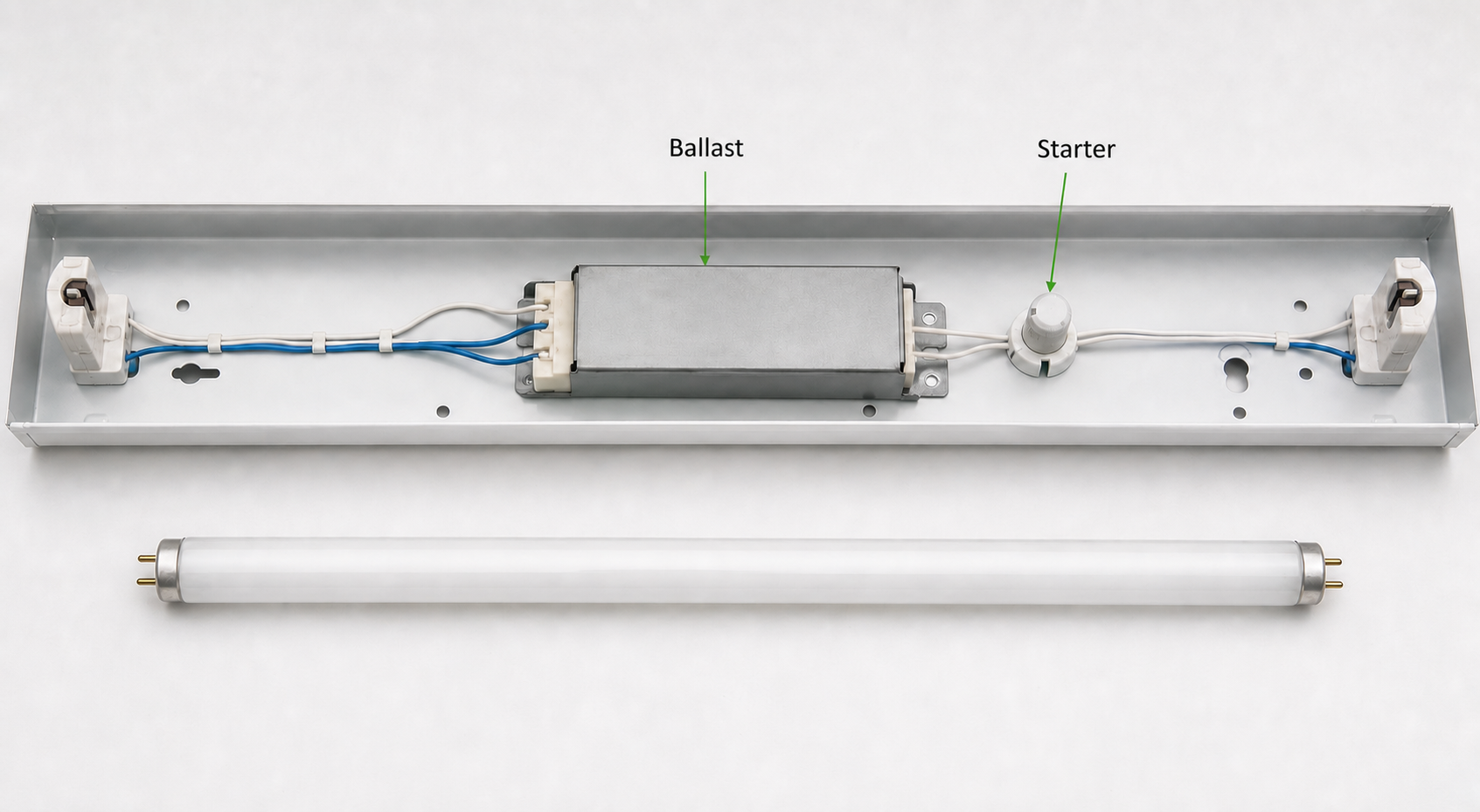
When a fluorescent tube stops working, starts flickering or takes too long to switch on, the problem may be caused by the tube itself, but it could also be caused by the starter or ballast inside the luminaire.
If you cannot identify the cause of the fault, seek help from a professional before replacing any components.
Check whether the tube is T5 or T8
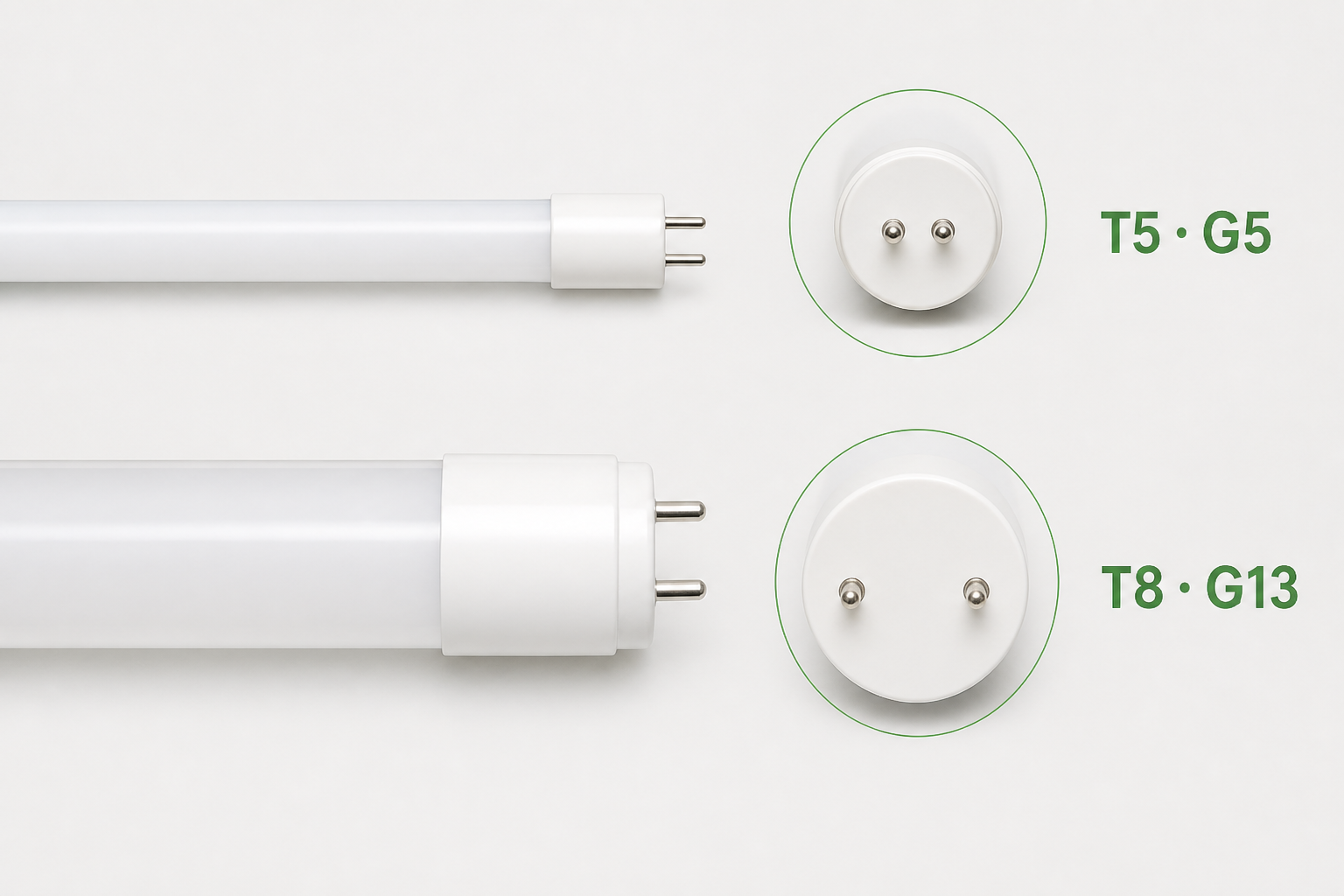
The most common formats are T5 and T8.
A T8 tube is wider and normally uses a G13 cap, with a greater distance between its two pins. A T5 tube is narrower and generally uses a G5 cap.
Because these formats have different dimensions and caps, they cannot be used as direct replacements for one another.
The safest way to identify the tube is to check the reference printed on the glass or take a photograph of its label.
Check the length
The new tube must have a suitable length for the luminaire.
Tubes are available in different lengths, including 600, 900, 1200 and 1500 mm. Even a small difference may prevent the tube from fitting correctly.
Whenever possible, use the reference shown on the original tube. If it is no longer readable, measure the tube and check the cap type as well.
Identify the type of connection
This is one of the most important checks. Not every LED tube will work with every luminaire.
The installation may use:
Conventional ballast and starter: some older luminaires have a visible starter. In this case, choose an LED tube that is compatible with an electromagnetic ballast, normally identified as EM. Depending on the model, the old starter may need to be replaced with a dedicated LED starter.
Electronic ballast: these luminaires normally do not have a starter. The tube must support HF operation and be compatible with the installed ballast model.
Direct mains connection: some tubes are designed to operate directly from a 230 V supply. This option may require changes to the luminaire wiring.
Universal tubes that support more than one type of power supply are also available. Even so, always follow the manufacturer’s instructions.
You should also check whether the tube is powered at one end or at both ends, as the type of connection varies between models.
Do not choose based only on wattage
Wattage indicates energy consumption, but it does not show how much light is produced.
When comparing a fluorescent tube with an LED tube, check the lumens as well. Lumens indicate the amount of light emitted. An LED tube can consume fewer watts while producing a similar or greater amount of light.
The colour temperature should be suitable for the area where the tube will be installed:
3000K: warm white light, creating a comfortable and welcoming atmosphere;
4000K: neutral white light, commonly used in offices, shops and working areas;
6500K: cool white light, frequently used in warehouses, workshops and technical areas.
If you want to maintain the existing lighting atmosphere, look for a code such as 830, 840 or 865 on the old tube. These codes generally correspond to 3000K, 4000K and 6500K, respectively.
If you do not know which LED tube is compatible, send us a clear photograph of the old tube and the luminaire. If possible, also photograph the ballast and starter.
The Wattlamp team will help you identify the product and look for a suitable option.
Always disconnect the power supply before photographing or handling the equipment.